Cancellation Is a Decision, Not an Outcome
Weather. Venue issues. An artist pulling out last minute. A public safety situation. Events get disrupted, and when they do, how you handle the disruption often matters more to your brand than the disruption itself. Attendees forgive events. They don't forgive disappearing event organizers, opaque refund policies, or radio silence in a crisis.
This guide covers the full decision and execution framework for event disruptions: when to postpone instead of cancel, how to think about refunds, what ticket protection actually covers, the communication sequence that preserves your brand, and the operational steps that keep the process from spiraling.
A note before we start: this guide is informational, not legal advice. Refund obligations, force majeure clauses, and consumer protection requirements vary by state and by the specific terms of your ticket sales. If you're facing a cancellation with meaningful financial exposure, work with your legal counsel and insurance provider alongside this playbook.
First Decision: Cancel, Postpone, or Partially Deliver?
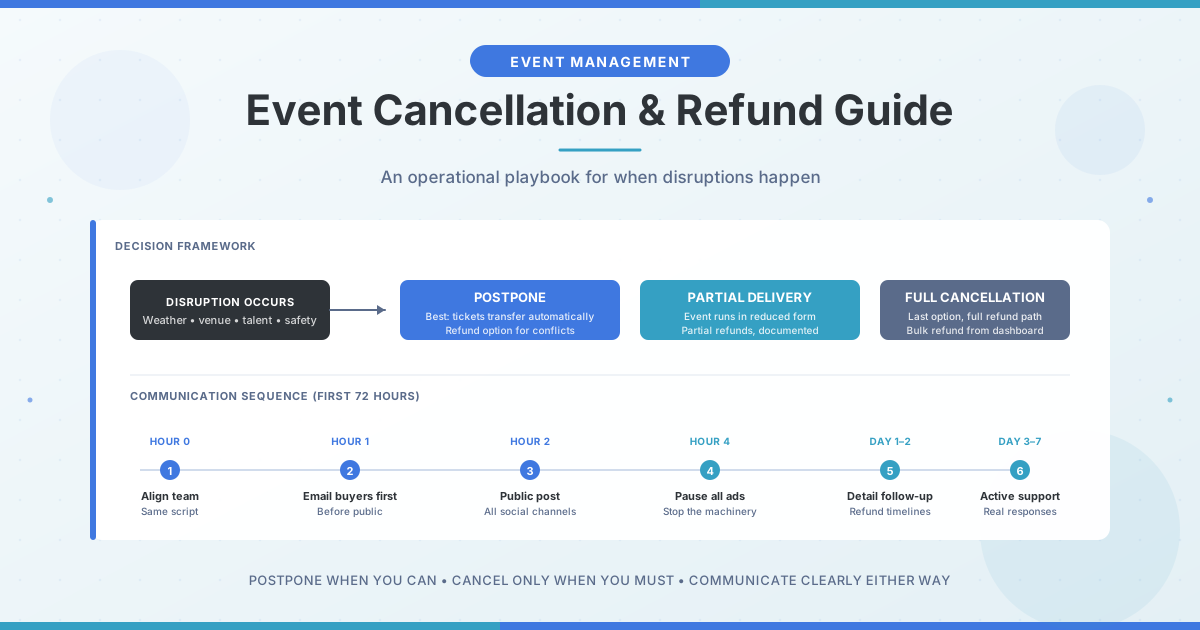
Before you announce anything, decide which scenario you're actually in. These three outcomes have very different implications for refunds, communication, and brand impact.
- Cancellation. The event will not happen, period. This is the most financially and reputationally costly path and should be treated as the last option rather than the first.
- Postponement or rescheduling. The event will happen on a new date. Tickets typically transfer automatically, and attendees who can't make the new date are offered refunds. This preserves a meaningful portion of your revenue and your audience's engagement, and for most recoverable disruptions it's the right choice.
- Partial delivery. The event proceeds but in a reduced form (early end, canceled headliner, moved to a smaller venue, partial programming lost). The refund question gets more complicated here, and so does the communication.
Most organizers reach for "cancellation" too quickly because it feels decisive. It's usually not the right call. Postponement keeps the commercial relationship alive, preserves most of your payout, and lets you preserve the investment your attendees have already made in planning around your event.
Ticket Protection: The Decision That Matters Before the Crisis
The best time to think about cancellation is when you're setting up ticket sales, not when you're facing a disruption. Ticket protection, offered to attendees at checkout and underwritten by a third-party insurance partner, lets buyers add refund coverage to their purchase for a small fee. If something happens to the event (or to them), they can claim a refund through the insurance provider directly, without requiring you to process it from your revenue.
Big Tickets integrates with a third-party ticket protection partner so organizers can offer this at checkout. When a buyer opts in, their protection is handled by the insurer, not by you. From a cancellation-scenario standpoint, this means:
- A meaningful portion of your refund exposure can be covered by insurance claims attendees file directly
- Your revenue retention improves even in worst-case scenarios
- Attendees have a direct refund path that doesn't require you to be the bottleneck
- You still have clear decisions to make on the rest of the ticket base, but with less financial pressure
For more on how ticket protection works in the Big Tickets platform, see our ticket protection page. It's the single most important pre-emptive step organizers can take against cancellation risk.
The Communication Sequence
The moment you decide to cancel or postpone, a clock starts. Every hour you delay gives attendees more time to hear about the disruption from social media, news outlets, or worse, from someone who made the trip to a closed door. A clean communication sequence for a cancellation or major disruption looks like this:
- Hour 0: Align internally. Before any external communication, get the full team on the same page. Everyone answering phones, responding on social media, or talking to press needs the same script, the same refund policy, and the same tone. Mixed messages during a cancellation are where brand damage multiplies.
- Hour 0–1: Notify ticket holders first. Your email to ticket buyers should go out before the public announcement, before the press release, before the social post. Buyers hearing about their own event's cancellation from a news alert is a reputational disaster that's easy to avoid.
- Hour 1–2: Public announcement across social media. Post the same message across Instagram, Facebook, X, LinkedIn (if relevant), and any community platforms where your event lives. Pin the post to your profile.
- Hour 2–4: Update your event website and ticket page. The ticket page should clearly indicate the cancellation, refund process, and contact information. Sales should be disabled. Remove or update all running ads that point to ticket sales.
- Day 1–2: Follow-up email with specifics. Your first email had to go out fast. The follow-up can be more detailed: refund timeline, rescheduling information (if applicable), contact channel for questions, and any apology or context appropriate to the situation.
- Day 3–7: Respond actively to individual inquiries. Cancellation support requires real people responding to frustrated buyers. Batch and template where possible, but make sure someone is watching social mentions, email replies, and support inquiries every day until the refund process is complete.
Big Tickets organizers can email ticket buyers directly from the event dashboard, which is the most reliable path for the first notification. For urgent or time-sensitive updates, many organizers also opt in to export their ticket buyer contact info (with proper consent handling) into a third-party SMS tool to reach attendees who may not check email in time.
Writing the Cancellation Message
The message itself matters. A few principles that consistently separate well-handled cancellations from PR disasters:
- Lead with what the attendee needs to know. Date and event name, whether it's canceled or postponed, and what happens to their ticket. Put that in the first two sentences. Explanation and context come after.
- Explain why, without overexplaining. Attendees deserve an honest reason. "Due to severe weather conditions affecting venue safety" is specific and appropriate. "Due to circumstances beyond our control" is vague in a way that erodes trust. You don't need to share every operational detail, but the reason shouldn't read as a dodge.
- State the refund or rescheduling path clearly. If you're refunding, say when and how. If you're rescheduling, give the new date and explain what happens for buyers who can't make it. Ambiguity here creates support volume that's entirely avoidable.
- Take responsibility when appropriate. If the cancellation is due to organizational error, own it. Trying to deflect in the message itself usually makes the PR problem larger, not smaller.
- Give a contact path. A specific email address, a support form, or a phone line for questions. Attendees with nowhere to go take their frustration public.
Refund Processing: The Operational Reality
Once you've decided on refunds, the execution is where most organizers underestimate the work. Getting the communication right is the visible part. Getting the refunds processed cleanly is where the quiet wins and losses happen.
Big Tickets supports both individual and bulk refund processing directly from the organizer dashboard. For a full cancellation, bulk refund processing moves orders in volume, typically back to the original payment method. A few operational realities to plan for:
- Refund timelines depend on the payment processor, not the ticketing platform. Credit card refunds typically take 5–10 business days to appear on the cardholder's statement. This isn't a failure; it's how the card networks work. Communicate this timeline clearly in your refund email so buyers don't start chargeback processes thinking the refund didn't happen.
- Chargebacks are a real risk during cancellations. Buyers who don't receive clear communication often dispute the charge with their bank rather than wait. Chargebacks cost more than refunds (processor fees plus dispute fees) and hurt your processor standing. Clear proactive communication is your best chargeback defense.
- Processing fees are a separate question. The refund policy on payment processor fees varies. Work with Big Tickets support and your contract to understand which fees are refundable in a cancellation scenario. For events using ticket protection, the insurance partner handles its own refund path for those covered tickets.
- Partial refunds require documentation. If you're refunding partially (e.g., for an event that ran but was cut short), document the calculation clearly. A published explanation of "refund = 60% of ticket price because 60% of the programming was lost" stands up better than arbitrary-looking partial refunds, both with attendees and, if it ever gets there, with regulators or small claims courts.
Rescheduling and Postponement: The Better Path When It's Available
When an event can be rescheduled rather than canceled, the math changes significantly. Tickets transfer to the new date by default. Most attendees will keep their tickets if the new date works for them. Your revenue retention is dramatically higher than a full cancellation. And your attendees feel like they're being helped, not abandoned.
Big Tickets includes built-in tools for cancellation, postponement, and transferring tickets to a new date, so organizers can execute a rescheduling without manually rebuilding their event. The key operational steps:
- Decide the new date before you announce. A postponement without a new date is just a cancellation with more confusion. Lock the venue, the talent, and the infrastructure before messaging attendees.
- Transfer tickets automatically. Use the platform's postponement tools to update the event date; tickets remain valid without any action required from the buyer. This is meaningfully different from asking buyers to rebook, which introduces friction and cart abandonment at exactly the wrong moment.
- Offer refunds to buyers who can't make the new date. Even though tickets transfer automatically, some percentage of your audience will have legitimate scheduling conflicts. A clear, generous refund window (often 14–30 days from the announcement) covers that cohort without damaging trust.
- Communicate the new date multiple times. Don't assume one email is enough. The initial email, a follow-up a week later, and a reminder as the new date approaches all help reduce no-shows and confusion.
Third-Party Vendors, Advertisers, and Active Campaigns
One of the most common cancellation mistakes is forgetting to stop the machinery that was selling the event. Within the first 24 hours of a cancellation decision:
- Pause all active Meta, Google, TikTok, and any other paid ad campaigns
- Notify any third-party ticket resellers or partners to stop ticket sales and honor refunds from their side
- Remove active email autoresponders or drip sequences that are still promoting the event
- Update your website and social media profiles to reflect the cancellation
- Coordinate with your affiliate or partner network if you're using one; partners running promotional content for a canceled event create confusion and potential refund liability
Every hour an ad continues to run after a cancellation is a potential new ticket sale that you'll then have to refund, and a customer service problem that was entirely avoidable.
Before the Crisis: Build Cancellation Resilience Into Your Event Plan
The organizers who handle cancellations well are the ones who thought about cancellation before it became a live problem. A few pre-crisis steps worth building into every event plan:
- Offer ticket protection at checkout. Attendees who opt in have their own refund path, reducing your exposure and your customer service volume in a worst-case scenario.
- Review your ticket terms and refund policy annually. Clear, publicly posted terms matter when questions arise. Include language on what happens in force majeure scenarios (weather, public safety, government orders) and on the difference between cancellation and postponement.
- Consider event cancellation insurance for your own business. Separate from attendee ticket protection, event cancellation insurance covers the organizer's loss. For higher-risk or higher-budget events, the premium is usually worth it.
- Maintain a clean buyer contact list. Email addresses, ticket type, and purchase date are all you need to communicate in a crisis. Make sure your ticketing data export is current and that the right team members have access.
- Draft a cancellation communication template in advance. Not the specific message (which needs to fit the specific situation), but the framework: opening line, reason paragraph, refund details, contact information, closing. Having the structure ready saves hours of decision-making in a crisis.
- Know your payment processor's refund and chargeback policies. Understand your processor's timelines, fees, and chargeback defense process before you need them.
When You Handle Cancellation Well, Your Brand Often Comes Out Stronger
The ironic truth about cancellations is that they can be brand-building moments. Attendees remember how organizers handled disruptions far longer than they remember the disruption itself. An organizer who communicates clearly, processes refunds quickly, and treats attendees with respect during a cancellation often earns loyalty that a smooth event never would have produced.
The reverse is also true. An organizer who goes silent, drags refunds for weeks, or leaves attendees to figure out what happened from social media rarely recovers. The difference between those two outcomes isn't the cancellation itself; it's the operational discipline and communication quality in the 72 hours after the decision.
Cancellation is never the goal. But when it becomes unavoidable, treat it as an operational problem with a clear playbook, not as a crisis to survive.
Ready to Run a Smarter Event?
Big Tickets helps festivals, fairs, concerts, and live events sell more tickets, streamline operations, and deliver a better attendee experience. No subscriptions, no setup fees.
Request a Demo